
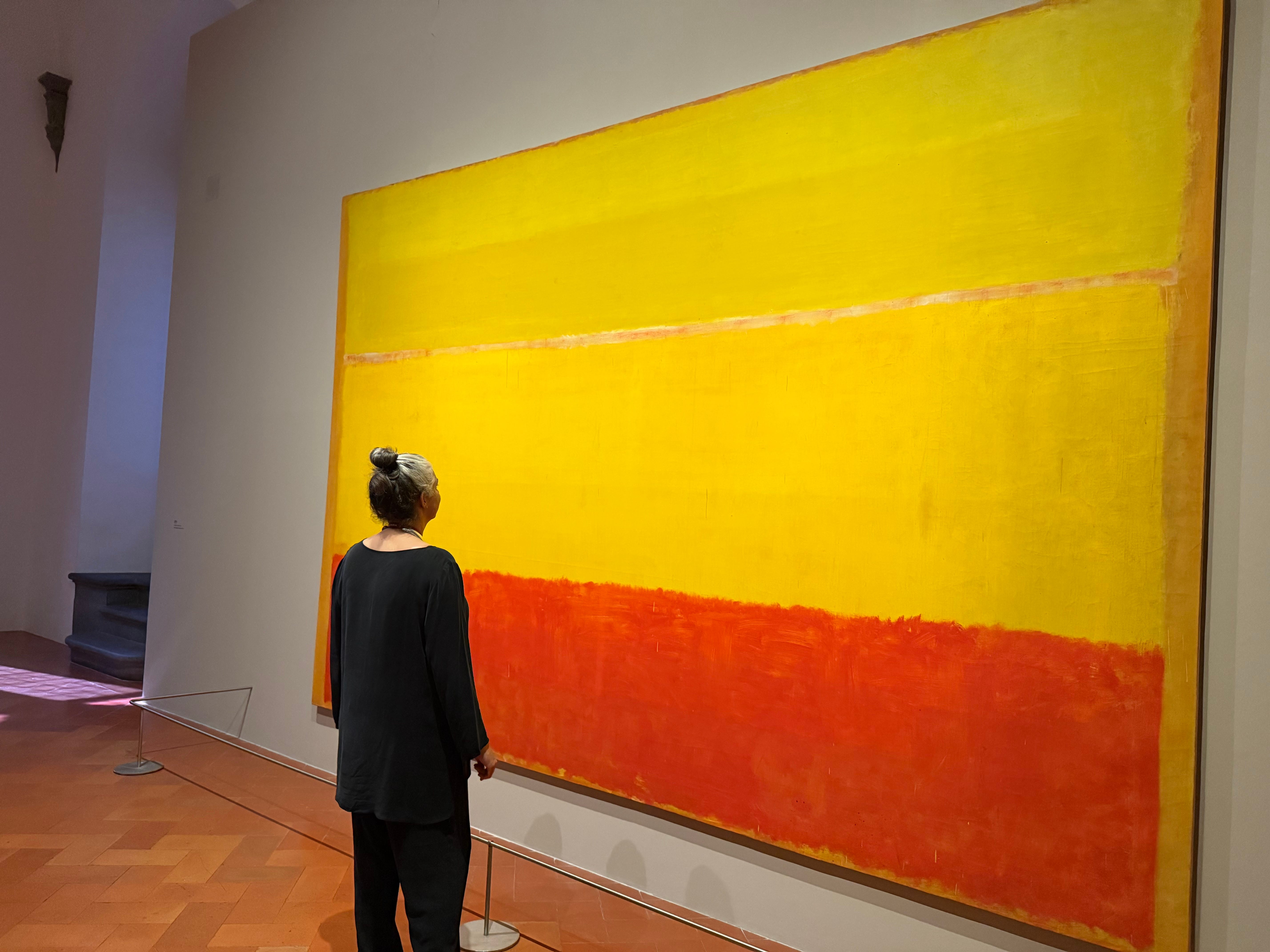
There is a room at my beloved hometown of Florence’s Palazzo Strozzi where they hung a single painting on a single wall.
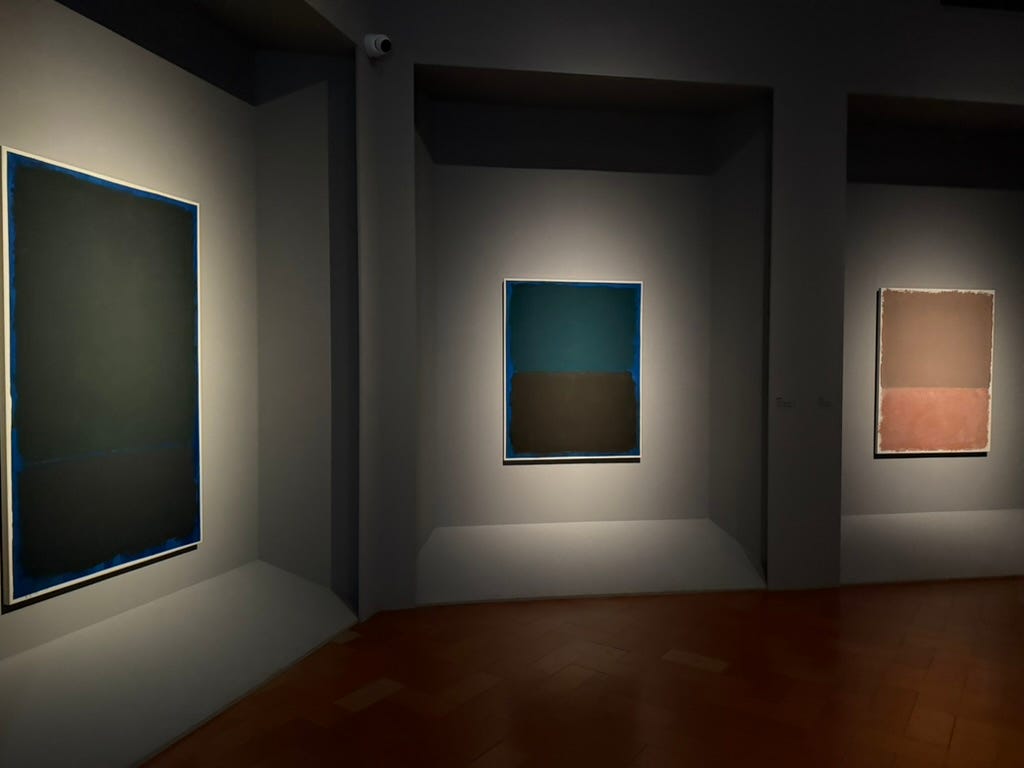
It is the loan from the Guggenheim Bilbao. Untitled, 1952-1953. Most of Rothko’s works are untitled because he didn’t want to push an idea on the viewer. This untitled is three meters tall, nearly four and a half wide. Two yellow horizontal bands floating over a baseline of red so saturated it looks wet. I stood in front of it and forgot who I was.
The exhibition is called Rothko in Florence. Seventy works tracing his full arc from the 1930s figuration through the pictograms, into the colour fields, ending in the dark Houston Chapel period. Curated by Christopher Rothko, the painter’s son, and Elena Geuna. It runs at Palazzo Strozzi until August 23, with two satellite installations at the Museo di San Marco and the vestibule of the Biblioteca Medicea Laurenziana, the spaces Rothko obsessed over when he first came to Florence in 1950.
I went expecting to see paintings. What I left thinking about was prompts. (And yet none of the images in this article are AI-generated, which says a lot about our creative process and what we should do before prompting)
The thing nobody is asking AI to do
Most AI image and video generation, right now, is busy. The prompts pile detail on detail. Lens choice, lighting setup, palette, era, mood, action, grain, emotional register, narrative subtext. The output, even when technically good, tends to read like a photograph of an idea about an image, rather than an image.
Rothko spent four decades doing the opposite. He removed almost everything from his work and asked what remained to do all of it. Light. Space. Tension. Time. The viewer’s body. Whatever it was that made a person cry in front of a canvas with two colours on it.
The standard line on Rothko is that his work is about colour. The standard line is wrong. His work is about what colour can be made to do when nothing else is in the room. The painting is the room. You are in it.
When we think about AI generation, it’s frequent to treat the frame as a surface to decorate. Rothko treated the frame as a space to enter, investing endless years of studying the tension between parts and colors. The difference between those two approaches is the difference between an AI image that looks like something and an AI image that does something to you.
Five things from the exhibition I am applying to AI Cinema
1. Colour as architecture
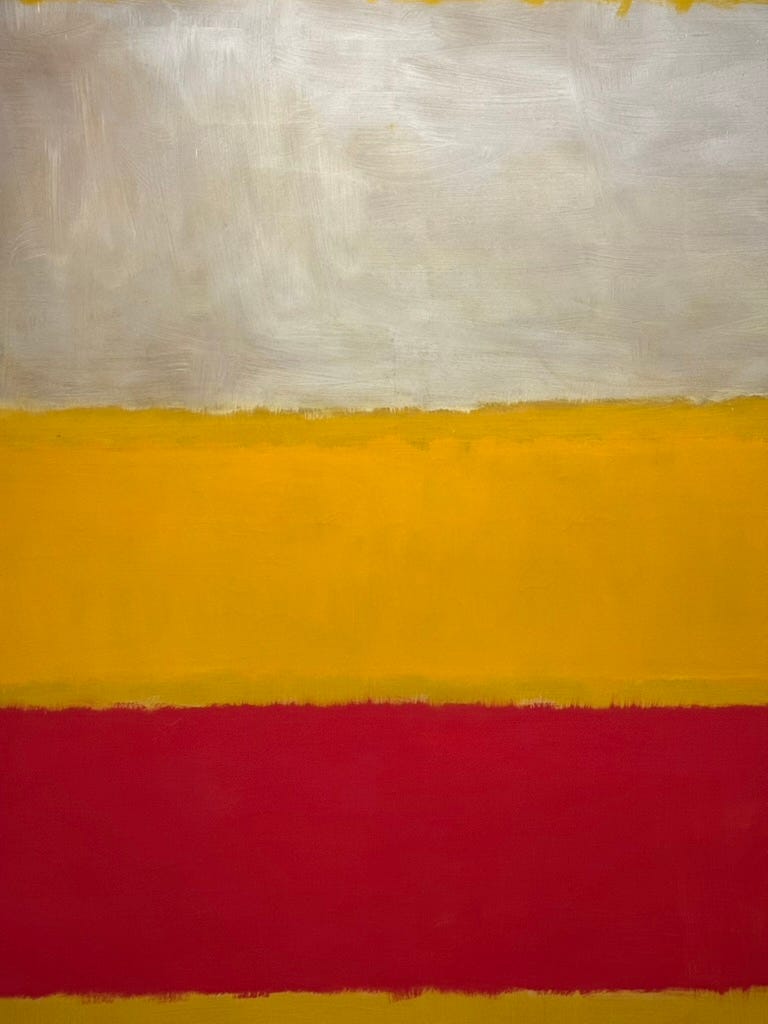
Rothko’s colours construct the canvas. The yellow band in the Bilbao painting is structural. Remove it and the red beneath collapses. The painting is built out of colour the way a room is built out of walls.
Most AI prompts treat colour as a finishing layer. Cinematic, warm tones, golden hour, teal-and-orange. The colour is paint applied to the image. The image was already an image before the colour arrived.
What Rothko is doing instead is making colour the thing the image is made of. The colour is not on top of the image. It is the image.
When I prompt now, I try to start from the colour. A frame built from cadmium red and ash grey, where the red is the floor the image is standing on. The intent has changed.
2. Restraint as power
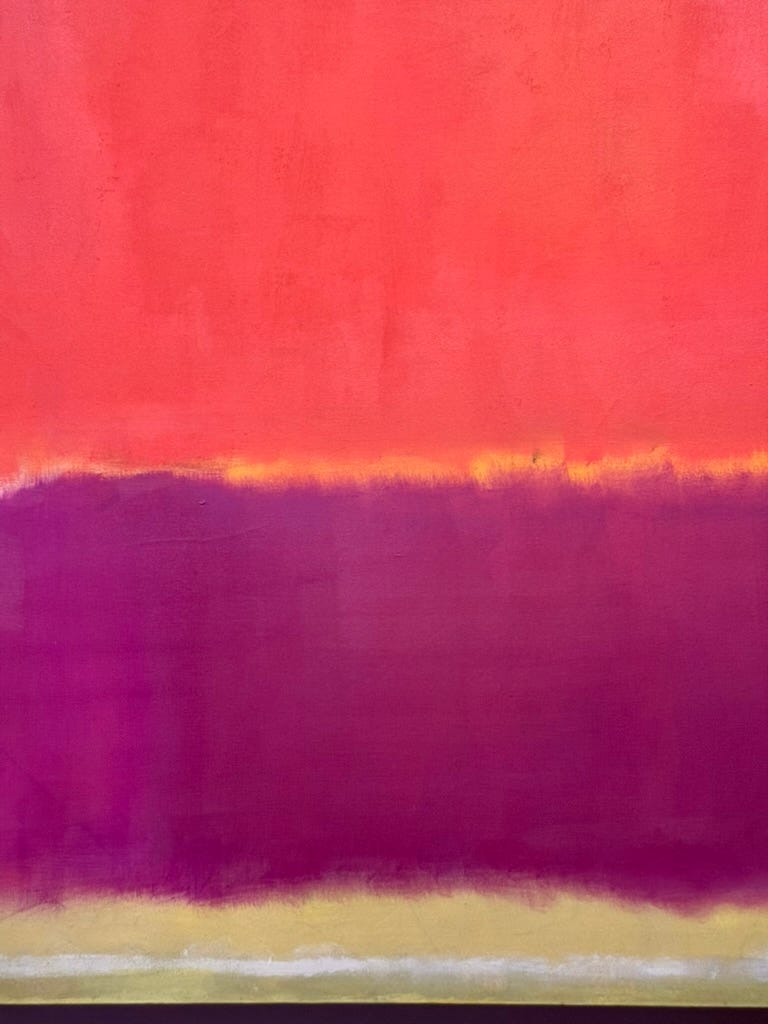
Restraint is what allows any one element to actually do its work, working beyond what minimalism could be. The yellow can mean what it means because there is nothing else in the room competing with it.
The corollary for prompting: every element you add to a prompt is borrowing meaning from every other element. The image at the end has to share its weight across all of them. The prompt with two ideas can have both ideas matter. The prompt with twelve cannot.
I now write the version with twelve and the version with two. The version with two is usually the one I use. It’s a great exercise in revealing the essence of what you want to express.
3. The temple problem
In 1959 Rothko visited Pompeii.
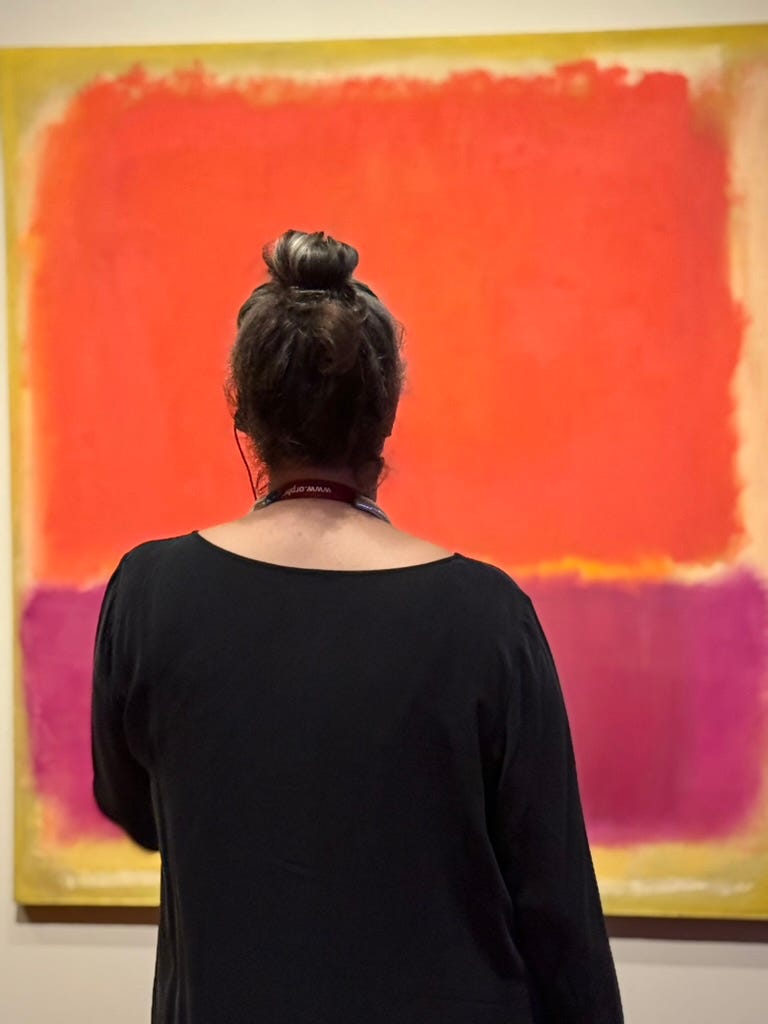
“All my life I have been painting temples without knowing it.”
He was forty-six. He had been making paintings for almost thirty years. He had developed his signature colour-field work nearly a decade earlier. And only after walking through the ruins at Pompeii did he understand what he had actually been doing all along.
This is the part of art-making that AI tools are worst at acknowledging. The work that takes years to know what it is. The prompt that is right in May was wrong in March even though the words have not changed, because the maker has shifted. The image looks the same. The intention behind it is different. The intention is the work.
I cannot tell you what I am painting without knowing it. None of us can. The discipline is to keep going long enough that the answer arrives. AI accelerates the surface and slows the depth, if you let it. The Rothko lesson is to keep prompting even when the prompts feel repetitive, because the repetition (and refinement of it) is the practice through which you eventually understand what you have been after.
4. Tension as the subject
Rothko absorbed the Italian Quattrocento, the architecture of Michelangelo, the proportional logic of the Renaissance. And he turned that absorbed measure against itself to produce work that looked nothing like its sources.
Most AI prompts try to resolve tension. They specify a single mood, a single style, a single emotional register, and then ask the model to render it cleanly. The image arrives without contradiction. It also arrives without life.
The Rothko paintings are tense. The red wants to advance, the yellow wants to recede, the edges blur and refuse to commit, the field hovers between immersion and surface. The painting is unresolved. That’s what makes it live.
When I prompt for video now, I try to write tension into the prompt itself. A face that is calm but not at peace. A room that is warm but not safe. Light that is generous but unreliable. The model handles these better than I expected. The work has more weight when the prompt itself contains contradiction. Prompting for opposites can yield surprisingly unique results.
5. Fra Angelico, or tradition is not the enemy
The most important satellite installation is at the Museo di San Marco. Five Rothkos hung among Fra Angelico’s frescoes, in the actual monastic cells the friars used in the 1440s. Rothko visited these in 1950 and was so moved he came back in 1966.
The light in his late work is the light Fra Angelico painted into the Annunciations. The compositional restraint, the spiritual register, the patient handling of pigment. All Florentine. All five hundred years older than the modernism Rothko is filed under.
The bad version of the AI cinema conversation treats tradition as the enemy. Old cinema, old painting, old craft, finally to be replaced. The actual practice teaches the opposite. The filmmakers and image-makers doing the strongest AI work right now are the ones who have spent time in front of paintings. Who know what Caravaggio did with light. Who can read a Pontormo composition.
The AI image generator does not know what to do until you do.
What to try after seeing this show
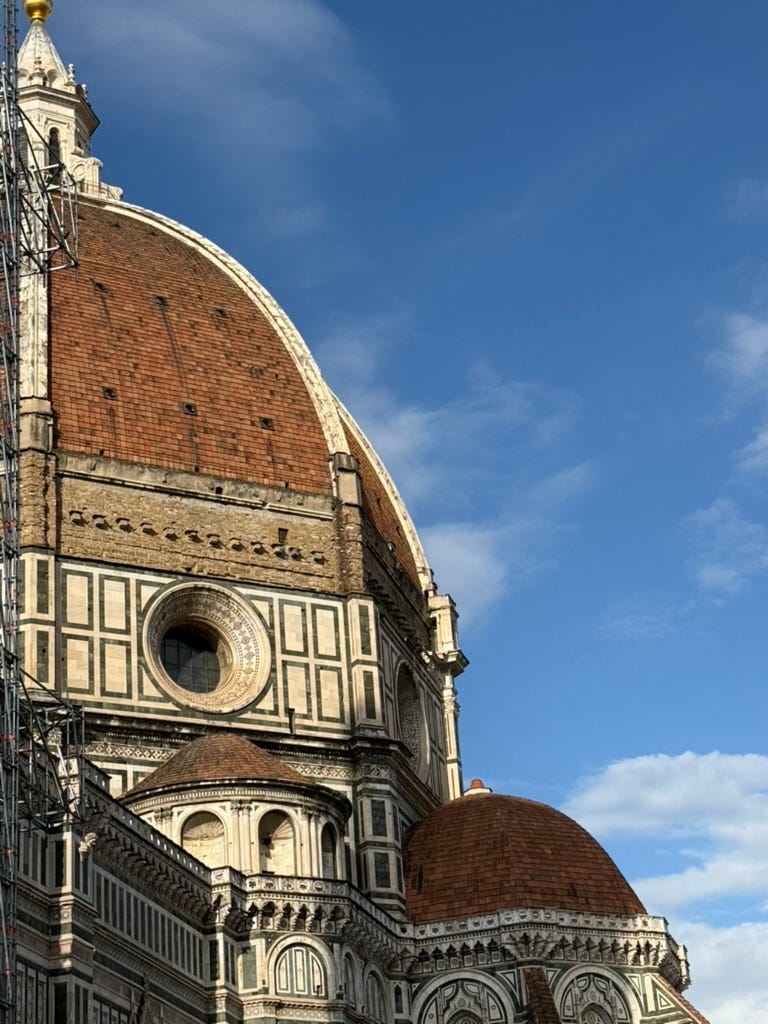
If you can get to Florence before August 23, go. Nothing I write here is a substitute.
If you cannot, three concrete things to try, anywhere, on whatever model you use.
First. Generate a single image with two colours and one composition rule. Nothing else. No subject. No lens. No mood adjective. A vertical field of cadmium red beneath a band of pale yellow, the boundary between them softened. See what you get. Now run it ten times with the same prompt. The variations are the lesson.
Second. Take a prompt you have been using and remove half of it. Run it. Then remove half again. Run it. Find the point where the image breaks. The breaking point is where the prompt was actually working from. Then add the opposite prompt instruction to it and see what happens. Experiment, experiment, experiment.
Third. Spend an hour with a painting before you prompt. In person if you can. Stay long enough to be uncomfortable. Notice what the painting is doing that no AI image you have made has done. Then write the prompt that tries.
You will not get it on the first try. Rothko did not get it on the first decade. The point is to know what you are after.
Enjoy the experimenting!
Elettra
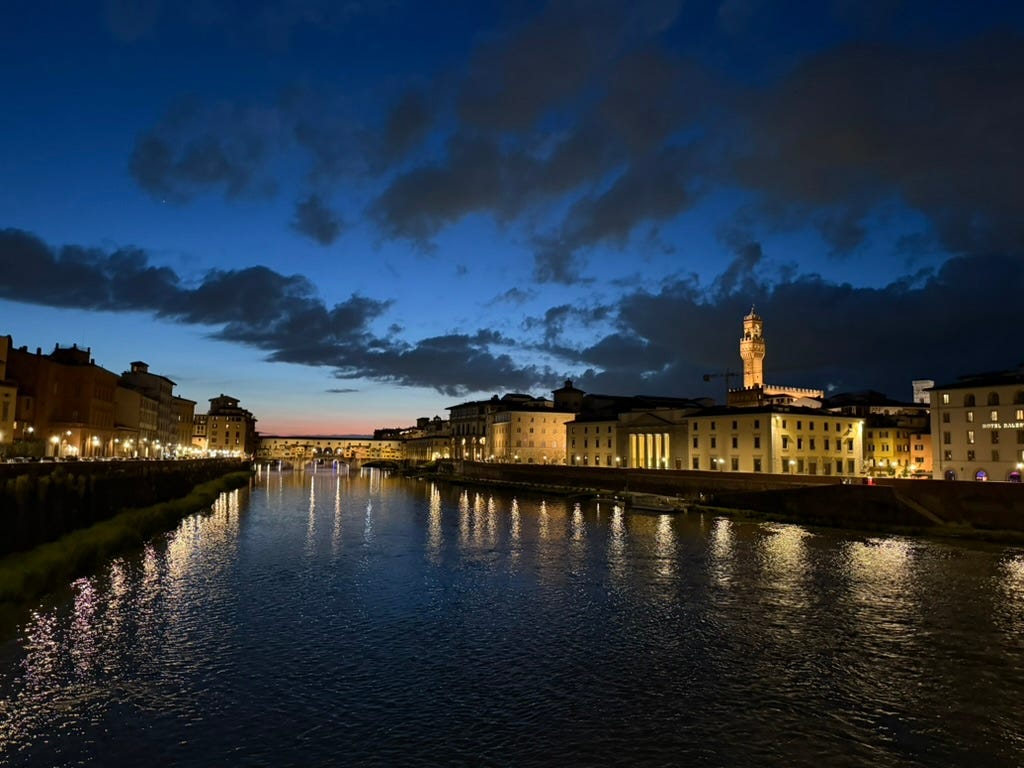
Rothko in Florence runs at Palazzo Strozzi through August 23, 2026, with satellite installations at the Museo di San Marco and the Biblioteca Medicea Laurenziana. If you go, write me back about what hit you.
What a great article!