I Just Had a Full Creative Session with Claude for My Film's Post-Production. Here's What Happened.
A behind-the-scenes look at using AI to solve real post-production problems on a real, live action Sorrentino-mentored film shot in Patagonia.

I'm in the final stages of editing Alma Robot — the sequel to Mamma Robot, which was a fully AI-generated film I made during the Nouvelle Bug avant-garde filmmaking lab near Venice, Italy.
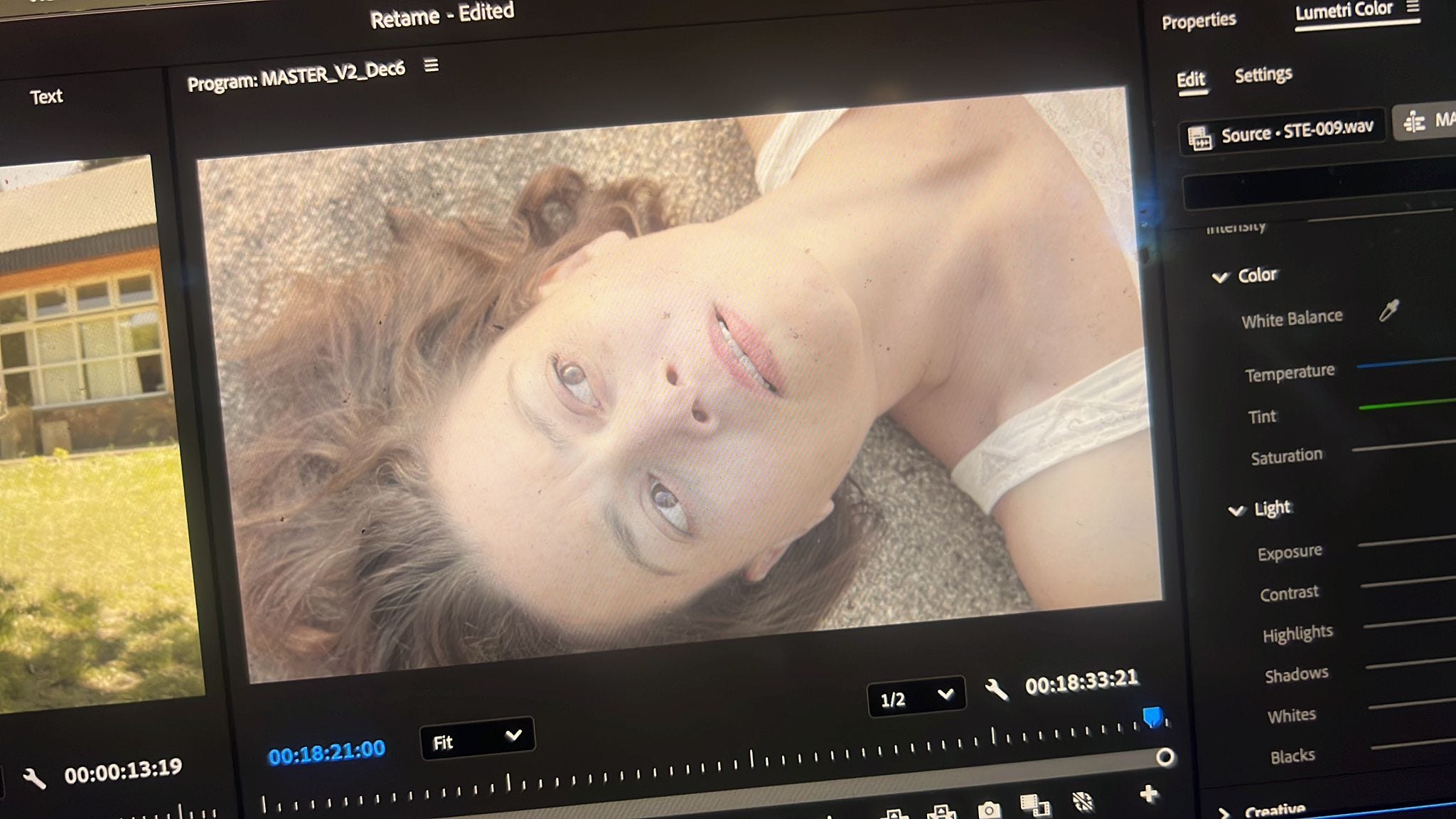
This time, everything is different. Alma Robot was shot in Patagonia with a real actress (Maria Lugones) and real locations, under the mentorship of Oscar-winning Italian film director Paolo Sorrentino (The Great Beauty, The Hand of God, Il Divo, Youth). Shout out to the PlayLab team!
Alma Robot is a live-action film — but AI is still part of the process. I've used AI-generated footage to replace shots that had dust on the lens, for example (more on that in a future post). But that's not what this piece is about. This is about something I didn't expect: using AI as a creative collaborator for sound design, visual development, and typography.
AI helped me think through problems in my film’s post-production before I brought solutions back to my team.


Here’s some insight on what worked, what surprised me, and what this means for filmmakers.
First, I had to explain the story. And it’s not a simple one.
Before Claude could help me with anything, I needed it to actually understand what I’m making. So I walked it through the whole thing:
Alma Robot is about the daughter of the character from Mamma Robot. Her mother had been a human who converted to a robot in order to carry her to term — so Alma’s first nine months of life were spent gestating inside a machine. Thirty years later, she’s living in Patagonia. She moved there to be closer to nature, married a fisherman so she could be near the water — but she’s actually terrified of the water, scared that maybe she’s part robot.
As I described it to Claude: “She ends up drinking this potion at the end of the film to test her humanity and drops to the floor. After my initial director credit, she opens her eyes. The film opens on her standing at the edge of the water, the beach. Then there’s the title. Then we see her driving while her voiceover talks to her mom, and then she’s with the fisherman as he fishes, explaining how they haven’t spoken in so long and she’s trying to have a child with her husband — which reminds her of her mom and the difficulty her mom had in having her, which is why she ended up having to convert to a robot.”
I gave Claude the full emotional and narrative context. That turned out to be the most important thing I did in the entire session. Because every creative suggestion that followed was rooted in understanding the actual story — not in generic filmmaking advice.
